PRODUCT SUBCATEGORY
OPEN LIVE SUBCATEGORY →
Corona Treatment
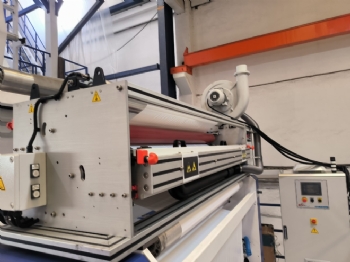
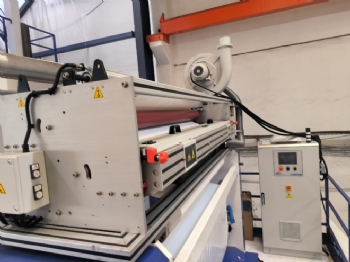
Corona treatment is a surface modification technique widely used in the plastic film manufacturing industry to improve the adhesion properties of plastic surfaces. This process is essential for films intended for printing, coating, or laminating, as plastic surfaces are naturally hydrophobic and have low surface energy, which makes it difficult for inks, adhesives, and coatings to adhere properly. Corona treatment effectively increases the surface energy of the plastic film, making it more receptive to various substances.
How Corona Treatment Works
The corona treatment process involves exposing the plastic film to a high-frequency, high-voltage electrical discharge, or corona, generated between two electrodes. As the film passes through this corona, the surface molecules are partially ionized (oxidized), creating micro-punctures that increase the surface area and introduce polar groups onto the surface. This modification significantly enhances the surface energy, improving wettability and adhesion properties without affecting the bulk properties of the material.
Applications in Plastic Film Manufacturing
- Printing: Ensures that inks adhere properly to the film, resulting in high-quality prints.
- Laminating: Improves the bond strength between layers of different materials.
- Coating: Enhances the uniformity and adhesion of coating materials.
- Labeling: Assists in the bonding of labels to containers or films.
